Windows and window glass in Winnipeg
Start with what the window is doing. Frost on the room side in a cold snap is usually humidity, not a failed window; see the frost or fog guide. Haze between the panes means the sealed unit has let go. A window that won't open is often the crank or a ridge of ice. Pick the problem below, and we'll connect you with an independent local pro who fixes that kind of window.
Glass problems
Glass problems: fog, cracks, hail and frost
Foggy sealed units
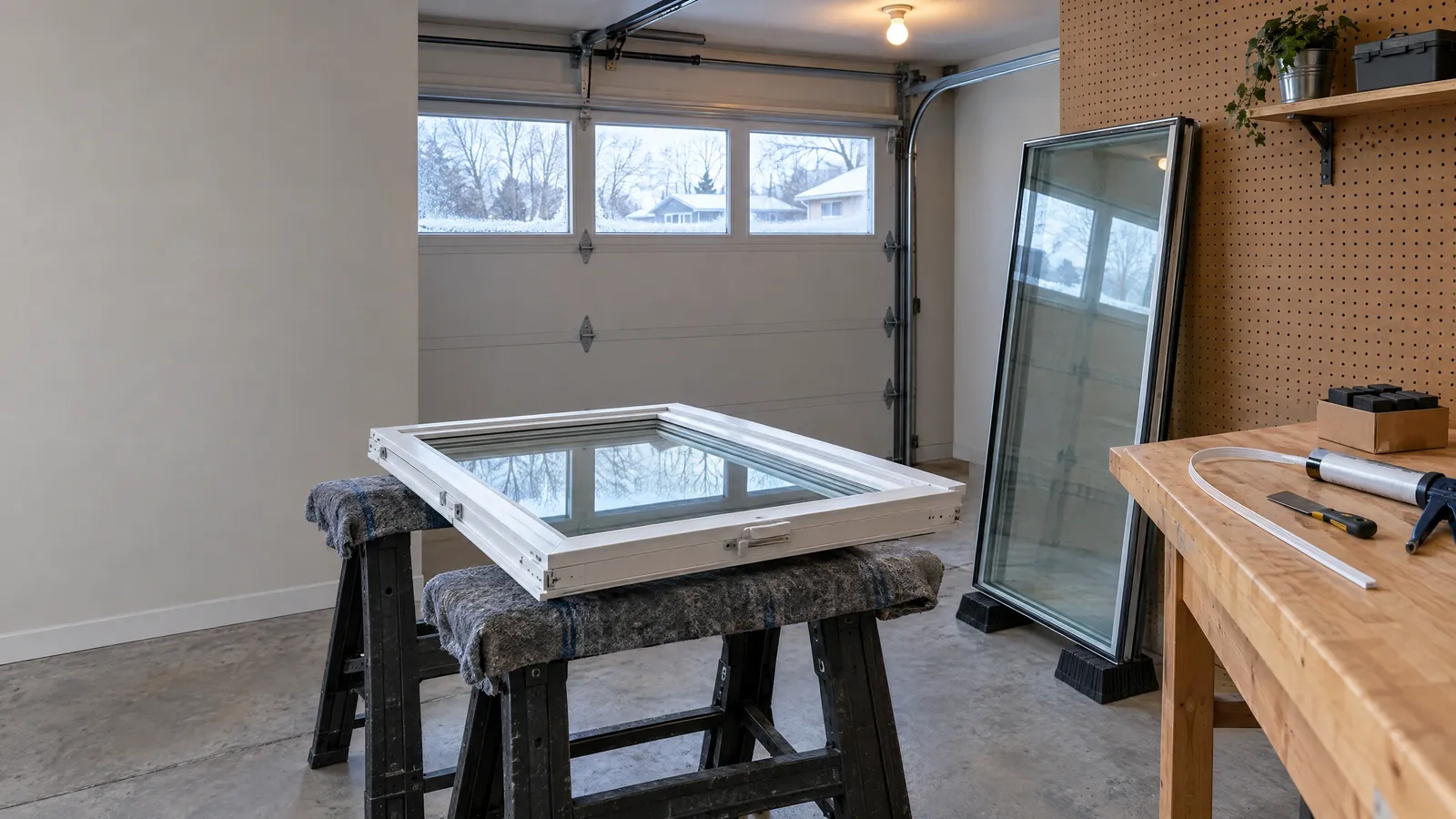
Haze trapped between the panes means the edge seal has failed. Often a new sealed unit clears it and the frame stays put.
Broken or cracked glass
A stone off the mower, a ball, a crack creeping from the corner. Most panes and sealed units can be replaced without a new window.
Hail and storm damage
Summer hail breaks glass, punches through screens and dents the capping. Take photos first, then cover the opening, then book proper repairs.
Emergency board-up
A rock through the window or a break-in after dark. Make the room safe, close the opening, then get new glass measured.
Hardware and seals
Hardware and seal problems: cranks, balances, locks, weatherstripping
Cranks, locks and balances
A crank that spins, a sash that won't stay up, a draft past the weatherstrip. The worn part is often the only problem.
Window screens
Torn mesh, bent frames or a screen that vanished over winter. Rescreening is a small job, and worth doing before the short summer.
Sliding and garden doors
A garden door that drags, won't lock or ices up at the sill usually needs rollers, a track or weatherstripping first.
Older homes
Older wood windows and storm windows
Wood window and sash repair
Rattling sash, crumbling putty, a soft sill. Original wood windows can often be restored; in heritage districts, check with the City first.
Storm windows
A tight storm keeps the inner sash warmer and cuts drafts on single glazing. Storms are still made for older openings.
Repair or replace? The guide
A plain walk through when new glass or parts are enough, and when the whole window has had its day.
Your house
What era is your house? What usually goes first
Built before 1960
Most houses in Wolseley and River Heights predate 1960, and many keep wood double-hungs behind storms. Putty, cords and sills wear first.
1960s and 1970s
Southdale was mostly built in these years. Sliders and first-round replacements are common, with tracks, latches and tired seals the usual complaints.
1980s to 2000s
Whyte Ridge and Linden Woods were mostly built in these years. Their casements' sealed units are reaching the fogging stage, often before the frames.
Newer homes
Even new triple-pane windows frost on the room side when a tight house holds humid air. That's a moisture fix, not a glass one.
Repair or replace
When replacement is the better call
Fix the part when
- The frame is solid enough for new glass or parts
- One or two units have fogged or cracked, not the whole house
- The trouble is a crank, lock or weatherstrip
- You'd like to keep original wood windows
Replace the window when
- The frame is soft, split or leaking air around the edges
- Several units are failing at once
- You want full triple-pane windows throughout
- Parts are gone and nothing else fits
Questions
Window questions from Winnipeg homeowners
Where we help
Window help across Winnipeg and nearby towns
Independent pros work across the city and in many towns past the Perimeter. If you're farther out, we'll check whether a pro covers your address.
Winnipeg neighbourhoods
Tell us what the window is doing and when the house was built
A photo and a rough age for the house go a long way. We'll pass them to a local pro who'll quote the fix.