Winter windows
Frost on the glass or a failed seal? How to tell in a Winnipeg winter
Ice or water on the room side of the glass comes from humid indoor air meeting cold glass, and it wipes off. Fog trapped between the panes means the sealed unit's seal has failed, and it won't wipe off. The first is usually fixed in the house. The second needs new glass.
Two different problems that look alike
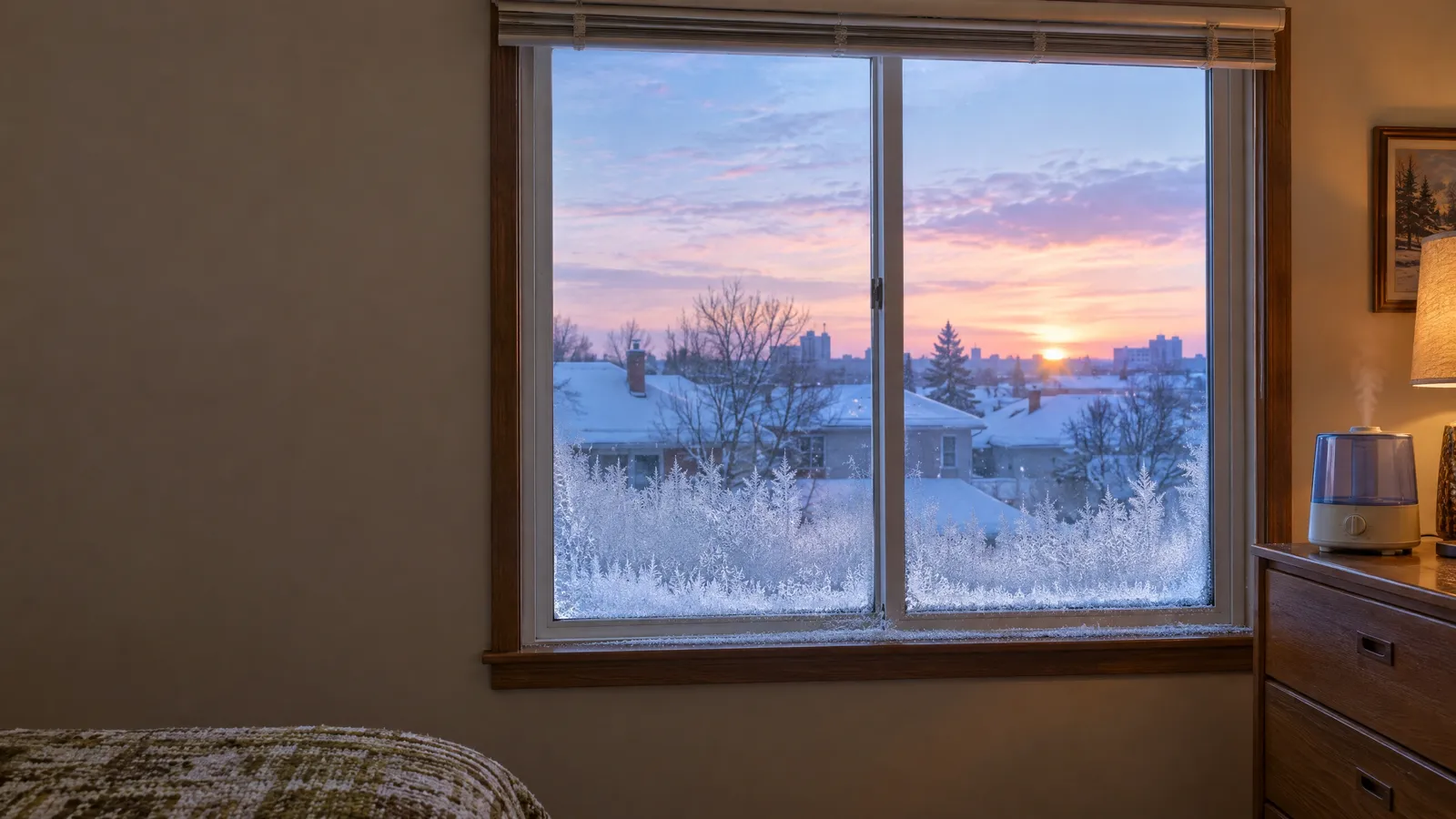
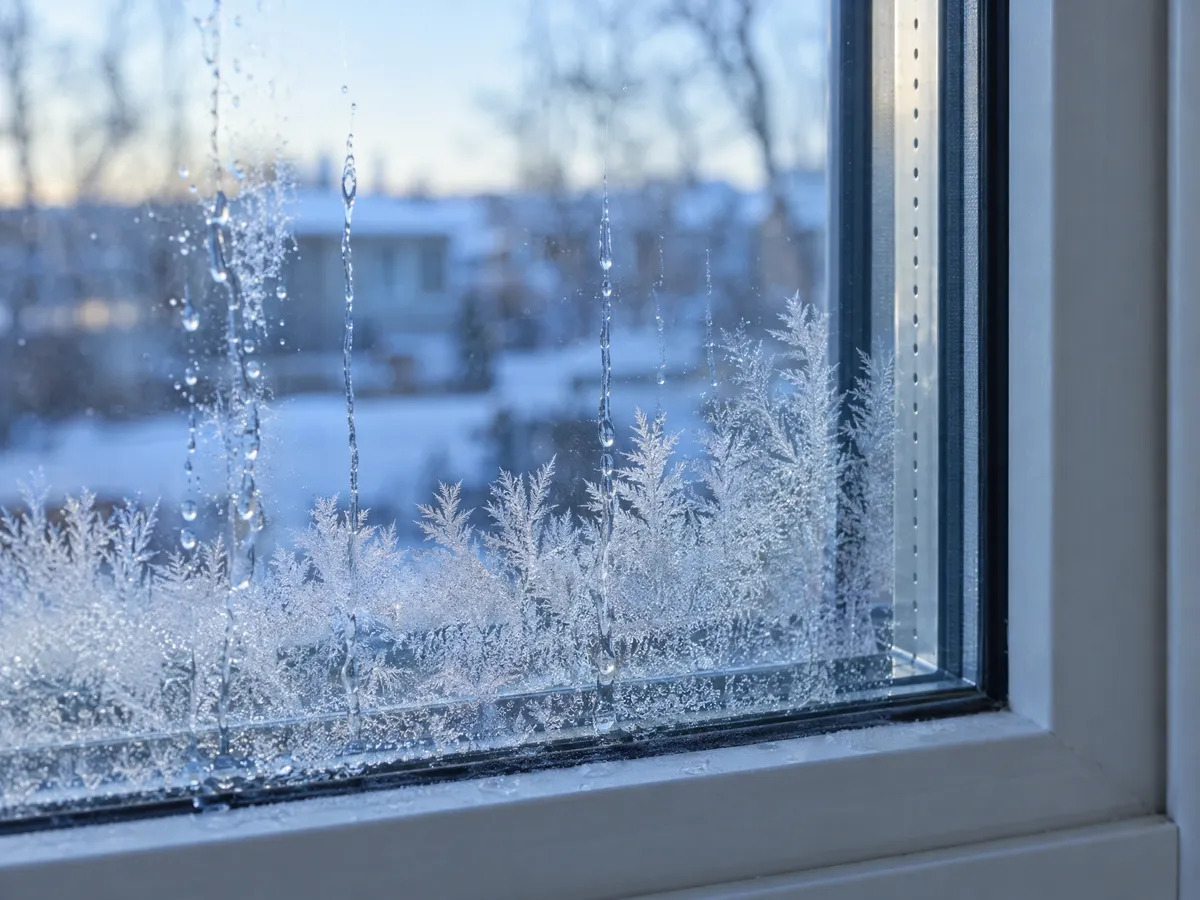
On a cold snap morning, a lot of Winnipeg windows look as if they've failed: a band of ice along the bottom of the glass and water on the sill. Most of the time, the window is doing what glass does when warm, damp room air meets a cold surface.
Fog between the panes is a different thing. A sealed unit is two or three panes held apart around the edge, with a sealed, dry space between them. When that edge seal fails, moisture gets into the space and shows up as haze, droplets or white streaks that you can't reach.
Room-side frost is a house problem with house fixes. A failed seal is a glass problem, and nothing you change indoors will clear it.
| Frost or water on the room side | Fog between the panes | |
|---|---|---|
| Where it sits | On the glass surface facing you | Inside the sealed unit |
| Dry-cloth test | Wipes off | Stays put |
| When it's worst | Cold mornings, humid rooms, closed bedrooms | Comes and goes with the weather, or never clears |
| What fixes it | Less indoor moisture, more air across the glass, a tighter sash | A new sealed unit, or defogging for looks |
The wipe test: which side of the glass is the moisture on?
- Wipe the room side with a dry cloth. If the frost or water comes off, it was on your side of the glass.
- If it doesn't, check the outside if you can reach it safely. Moisture on the outer surface is its own thing, and on efficient glass it usually means the glass is keeping heat in.
- If it's on neither surface, it's between the panes. Droplets that don't move, a milky film or white mineral streaks near the edge mean the seal has gone.
Look again on a milder afternoon. Room-side frost fades as the glass warms. Fog inside a failed unit tends to hang on, and over time it leaves a haze even on dry days.
Why Winnipeg windows frost
The physics is the same everywhere. Winnipeg just turns it up. Glass is the coldest surface in most rooms, and during a long, deep cold the inside face of the glass gets cold enough to freeze the moisture in room air before it can run off.
Winter air outdoors here is very dry, but the air inside isn't. Cooking, showers, laundry, plants, a humidifier and people breathing all add moisture, and a well-sealed house holds on to it. When that air touches the coldest spot in the room, the moisture condenses. If the glass is below freezing, it becomes frost.
That explains the usual pattern. The bottom of the glass frosts first, because cold air slides down the pane and pools at the sill. Bedrooms are often worst: the door is closed overnight, and blinds or heavy curtains keep warm room air off the glass.
Fixes for room-side frost: humidity, airflow, blinds, weatherstripping
- Bring indoor humidity down in winter. Run the bathroom and kitchen fans while you shower and cook, and for a while after. If you use a humidifier, turn it down or off when the windows start icing. If your house has a heat recovery ventilator, keep it running with clean filters. A simple hygrometer shows whether the air is climbing on cold days.
- Keep air moving over the glass. Open blinds and curtains during the day and leave a gap at night. Keep furniture and long drapes off the heat registers under windows. A ceiling fan on low helps in a closed bedroom.
- Tighten the sash. Warm, moist air that leaks into the gap between sash and frame freezes there. Worn weatherstripping, a lock that doesn't pull tight or a crank that won't close fully all let it in. These are small jobs, covered under window repair.
- Wipe up meltwater so it doesn't soak into wood sills and drywall.
Give changes a few cold days to show. Frost that shrinks from a thick band to a thin line at the bottom edge is a win.
Patio and balcony doors: ice at the sill
Sliding patio doors, garden doors and high-rise balcony doors often ice up at the bottom first. There's a lot of glass, a track at floor level, and cold air pooling along the floor. A little frost along the bottom track in a cold snap is common.
Ice that builds day after day, a door that freezes shut, or a draft you can feel at the sill is different. It usually points to worn weatherstripping, a panel sitting low on tired rollers, or a threshold that needs adjusting. Those are sliding door repairs, not necessarily a new door.
New homes and new windows that frost
Frost on brand-new windows is common in the first winters in a new house. Concrete, framing, drywall and paint all release moisture as they dry out, and new houses are built tight, so the windows are where it shows first. Run the ventilation as the builder intended and keep humidity in check, and it usually settles down.
New replacement windows are the same: better glass doesn't mean no frost if the room air is humid enough. If one window frosts much worse than its neighbours, or ice forms around the frame instead of on the glass, ask the installer to check the installation.
When frost means the window is failing
Sometimes the frost is telling you about the window, not the house. Watch for:
- Ice on the frame or the wall around it, rather than on the glass. That can mean air leaking around the window.
- One window frosting heavily while others on the same wall stay mostly clear.
- Thick frost on single-pane glass in older homes. A tight storm window is the traditional fix, and wood sash repair can keep the original working.
- Soft, stained or peeling sills where meltwater sits every winter.
- A cracked pane in a sealed unit. Air gets into the unit through the crack, so it fogs and frosts in ways the others don't. That one needs new glass; see broken window glass.
Fog between the panes: the sealed unit has failed
If the wipe test says the moisture is inside, the seal has let go. It won't dry out on its own, and turning down the humidity won't touch it. Winnipeg's long heating season and the swings across freezing every spring and fall work that edge seal hard.
The usual fix is a new sealed unit set into the existing frame. Defogging can improve the look but doesn't restore a factory seal. If the frame is failing too, a whole new window may make more sense. The foggy sealed unit page covers all three, and the repair-or-replace guide helps you weigh them.
Will triple pane stop frost?
It helps, but it doesn't promise a frost-free window. With an extra pane and gap, the room-side glass stays warmer, so it takes more humidity or deeper cold before frost forms. In a humid room during a hard cold snap, even good triple-pane glass can frost along the bottom edge, where the glass meets the frame and runs coldest.
If you're replacing windows anyway, triple pane is the sensible choice here, and it's the only kind the Efficiency Manitoba rebate counts. See triple-pane and energy-efficient windows. If your windows are sound and the frost is a humidity problem, fix the humidity first. New windows won't solve that on their own.
When to get a pro to look
- The moisture is between the panes.
- Frost keeps coming back on one window after you've lowered humidity and opened the blinds.
- Ice forms on the frame or the wall, not the glass.
- The sash won't close tight, or meltwater is softening the sill.
Take a photo with the frost or fog showing, plus one of the whole window and one of a corner. Send them with a quote request and we'll connect you with a local glass pro who can tell you whether it's the glass, the window or the house. If it's the house, a good pro will say so.
Frequently asked questions
Why is there ice on the inside of my windows?
Moisture in your room air is freezing on cold glass. In deep cold the inside face of the glass drops below freezing, so condensation turns to frost, usually along the bottom edge first. It's a sign of indoor humidity meeting a cold surface, not necessarily a bad window. If it wipes off with a dry cloth, it's on your side of the glass.
Is condensation on the inside of windows a sign of a bad seal?
Not if it's on the room-side surface. A failed seal shows up as fog or streaks between the panes, where you can't wipe it. Condensation you can wipe away comes from the room. It can still point to a problem, such as high humidity or a sash that isn't closing tight, but the sealed unit itself is fine.
How much humidity should I keep indoors in winter?
Enough to be comfortable, and low enough that the windows stay mostly clear on cold mornings. The colder it gets outside, the lower indoor humidity needs to be to avoid frost, so turn a humidifier down during a cold snap. A hygrometer helps you watch it, and a heating technician can suggest a setting that suits your house.
Why does ice build up at the bottom of my patio door?
Cold air pools at floor level, and the track and bottom rail are the coldest parts of the door. Some frost there in a cold snap is normal. Ice that builds up day after day, or a door that freezes shut, usually means worn weatherstripping or a panel sitting low on its rollers. See sliding door repair.
Is it my curtains or blinds causing the frost?
They don't add moisture, but they can make frost worse. Closed blinds and heavy curtains trap a pocket of cold air against the glass and keep warm room air from reaching it. Open them during the day, leave a gap at night, and keep drapes off the heat register under the window.