Foggy windows · Winnipeg
Ice on the glass, or fog inside it? Start here
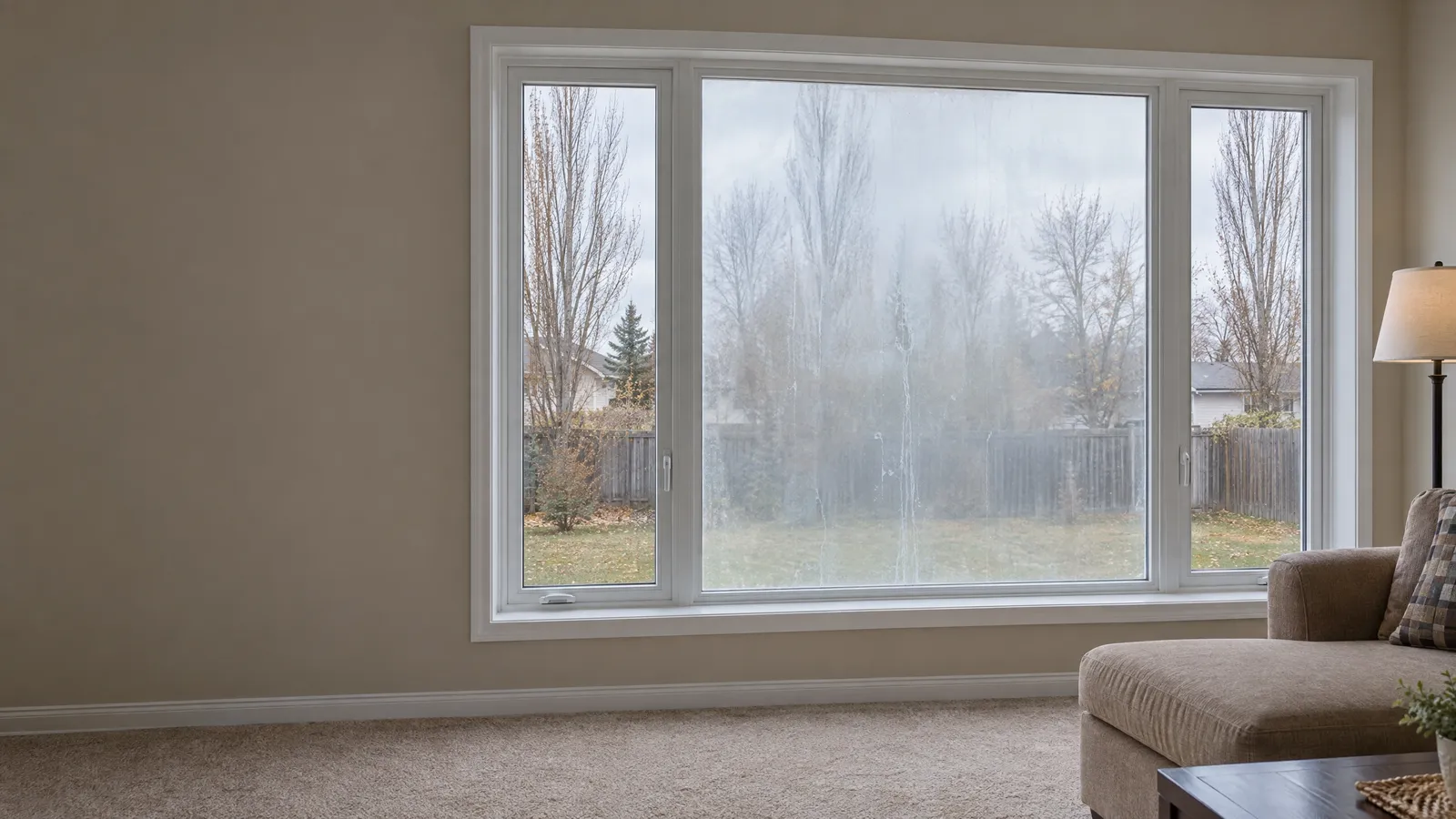
On a cold Winnipeg morning, most windows show something. Frost or water on the room side of the glass usually means indoor humidity, not a broken window. Mist, streaks or a milky haze that sits between the panes and won't wipe off is different: the seal has failed. That doesn't always mean a new window. Often only the sealed unit, the glass part, needs replacing. We connect you with an independent local glass pro who can tell you which it is and quote the fix.
- Often just the glass, not the whole window
- Photo-first quotes from local pros
- Straight answers on rebates
The wipe test
How to tell a failed seal from winter condensation
Wipe the glass on the inside with a dry cloth. If the moisture comes off, it's condensation from the room. If it stays, it's inside the unit. Check the outside too; dew on the exterior on a humid morning is normal.
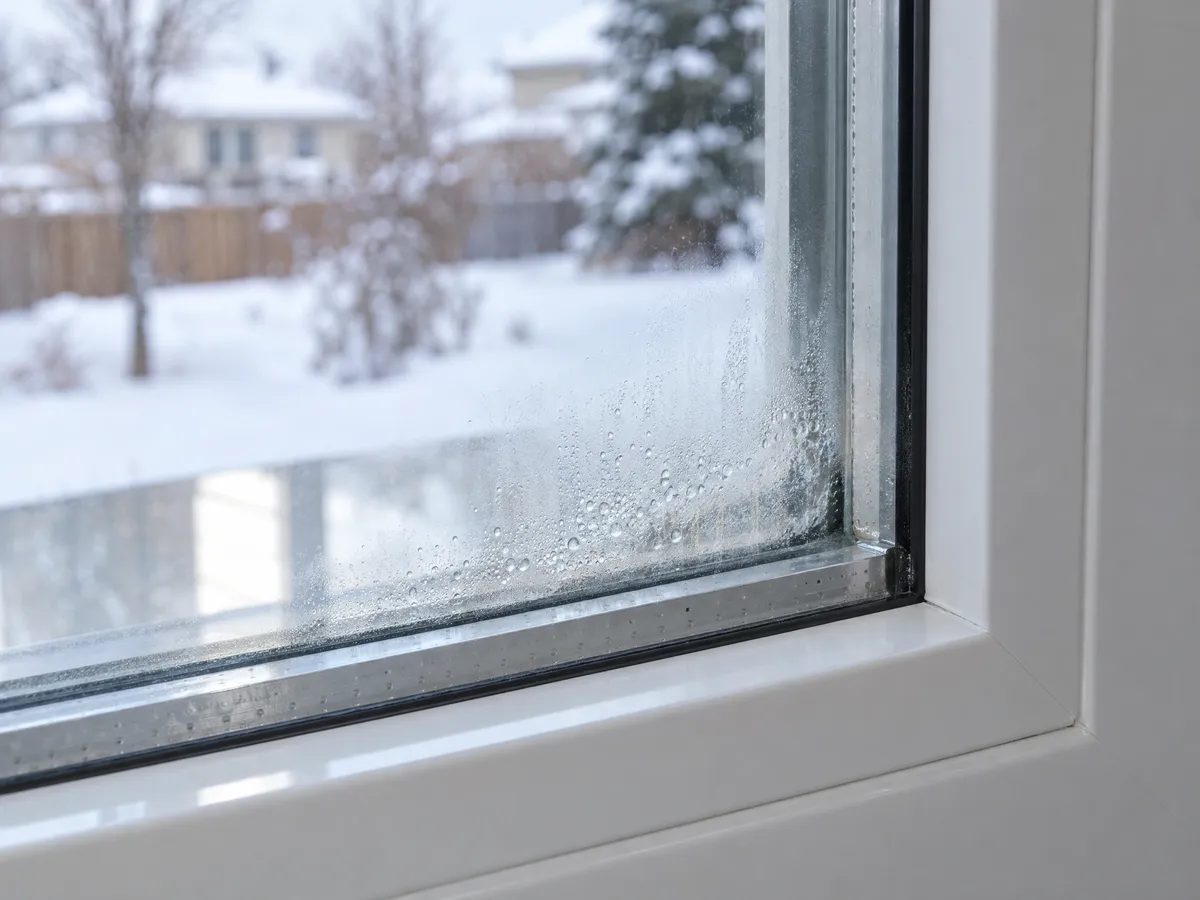
Frost or water on the room side
Common in a cold snap, especially on bedroom and bathroom windows and at the bottom of patio doors. Dry winter air and warm, humid rooms meet cold glass. It wipes off. Our frost versus fog guide explains what to change indoors.
Fog, streaks or haze between the panes
Moisture that comes and goes with the weather, or a white film that never clears, means air has got past the edge seal. It won't dry out on its own, and it won't wipe off.
Why it happens
Why sealed units fail faster in a −30 climate
A sealed unit is two or three panes held apart by a spacer and sealed around the edge. The space inside is dry, and that's what keeps it clear and insulating.
Winnipeg asks a lot of that seal. The heating season is long, some winter nights drop past −30, and spring and fall bring many days that swing across freezing. Every swing makes the glass and the air inside expand and contract, and over the years the edge seal lets go.
Age matters too. Most Winnipeg homes were built before the 1980s, and many had their windows replaced in the 1990s and 2000s. That generation of sealed units is reaching the fogging stage now, which is why so many picture windows and patio doors go cloudy at once. Hail is worth a look as well: a pane can survive a storm with a small chip at the edge and start fogging a season later.
Your options
Three ways to fix a foggy window
There's no single right answer. The pro we match you with looks at the frame, the glass and the window's age before recommending one of these.
Replace the sealed unit
The frame, sash and trim stay. A new glass unit is made to size and set into the existing opening. It's the usual fix when the frame is sound, and it can be upgraded from double to triple pane in many frames.
Replace the sash
For casements and awnings, the opening part of the window can sometimes be replaced as one piece when the glass and the hardware are both tired.
Replace the whole window
When the frame is soft, the window leaks air around the edges, or several units are failing at once, a new window can make more sense. See retrofit versus full-frame replacement for the two ways it's done.
Defogging
Does defogging work? An honest look
Some companies drill the glass, dry out the space and seal the holes. It can clear the view on a unit that's fogged but not badly etched.
What it can do
Improve how the window looks, often for less disruption than new glass. It suits a single unit you'd like to keep for a while.
What it can't do
Restore the original insulating gas or a factory seal. If the haze has etched the glass, it won't come clean. Ask any provider what they guarantee, and for how long.
Rebates
Why a glass-only fix doesn't earn the rebate
Winnipeggers often ask about a Manitoba Hydro grant. The window and door rebate is run by Efficiency Manitoba, and it pays only for full ENERGY STAR triple-pane windows and doors with an NRCan reference number. Glass inserts without a full frame don't qualify.
So a new sealed unit is usually the cheaper fix, but it won't earn a rebate. A full triple-pane replacement might. Check the program page for current rules before you decide; our rebate guide walks through what counts.
What affects the quote
What shapes the price of a sealed unit
Every unit is made to measure, so the quote depends on what you have. These are the things the pro will ask about:
- Size and shape of the glass, including arched or oversized picture units
- Double or triple pane, and any low-E or tinted coating
- How the unit is held in: glazing stops, tape, or a sash that has to come out
- Access, such as upper floors, stairwells or units behind storm windows
- Frame condition, since soft wood or a warped frame changes the job
A photo of the whole window, a close-up of the corner, and the rough width and height help a pro quote before visiting.
Fogged again?
When a newer unit fogs too soon
If a replacement unit fogs within a few years, check your paperwork first. Most sealed units carry a warranty from the maker, and the installer usually handles the claim.
When you get quotes, ask what the unit is made of, whether the spacer is warm-edge, and what the warranty covers. A good pro will answer plainly. If a window keeps fogging no matter what glass goes in, the frame or the way it drains may be the real problem, and that's worth a second look before paying for glass again.
Questions
Foggy window questions
Explore your options
Other window problems we can help with
Local pros replace sealed units across the city and in nearby towns, including Transcona, St. Vital, Fort Garry, North Kildonan and Selkirk.
Send a photo of the fogged window
Tell us which window it is and roughly how big. We'll pass it to a local glass pro who replaces sealed units and gets back to you with a quote. If a new unit will do, they'll say so.